Reporting on the GOA Public Master Class
Put on by Members of the Orchestre de Paris
The French Orchestral Sound: Its Underlying Foundations
Text by Hiroyuki Yagi
Supervised by Stephen Sanguinetti (Translation)
Cover Photo by Ryohei Tomita
Learning Orchestral Studies within an Ensemble
In 2014, the Tokyo Metropolitan Theatre launched the “GEIGEKI Orchestra Academy for Wind” (hereafter GOA, formerly the GEIGEKI Wind Orchestra Academy). This is a three-year program where young wind players, after graduating from university music programs, cultivate the skills required to work as professional musicians. In solo and ensemble lessons, instructors include not only wind players but also musicians from other instrumental fields, allowing students to acquire expressive skills that go beyond their own instrument. In addition to performance skills, GOA offers a “Career Development Seminar,” where students learn essential skills for a professional musical career. These skills include accounting and public relations for project management, and writing skills for program notes. For ten years, GOA has continued to train musicians to have a broader perspective, which is not just limited to instrumental technique.
For many academy students, one of their greatest goals is to pass professional auditions and secure a permanent position as a member of an orchestra. Therefore, preparation for orchestral excerpts—excerpts of solos and technically demanding passages from orchestral repertoire used in auditions—holds a vital place in the curriculum. One advantage unique to an academy that gathers so many musicians is that students can receive orchestral study lessons in sectional units for woodwinds and brass. Accurately grasping how other parts interact while playing one’s own solo is key to passing auditions, yet such knowledge is difficult to obtain when practicing orchestral excerpts alone or only through one-on-one lessons.
“It is a huge benefit to actually learn within an ensemble how your instrument interacts with others—something you cannot understand when playing alone,” said Kanae Kuriyama (clarinet, student in GOA’s 10th generation class).
“When taking sectional lessons, it is challenging because you must present what you have prepared while remaining aware of those around you. But that difficulty brings many insights and makes the lessons more practical. Teachers often give advice such as, ‘Pay attention to the trumpets there,’ or, ‘You should take the initiative,’ which expands our perspective in ways only sectional lessons can provide,” noted Yuki Furukawa (horn, student in GOA’s 10th generation class).
An Orchestra Where There is Playfulness Between Music and the Ensemble
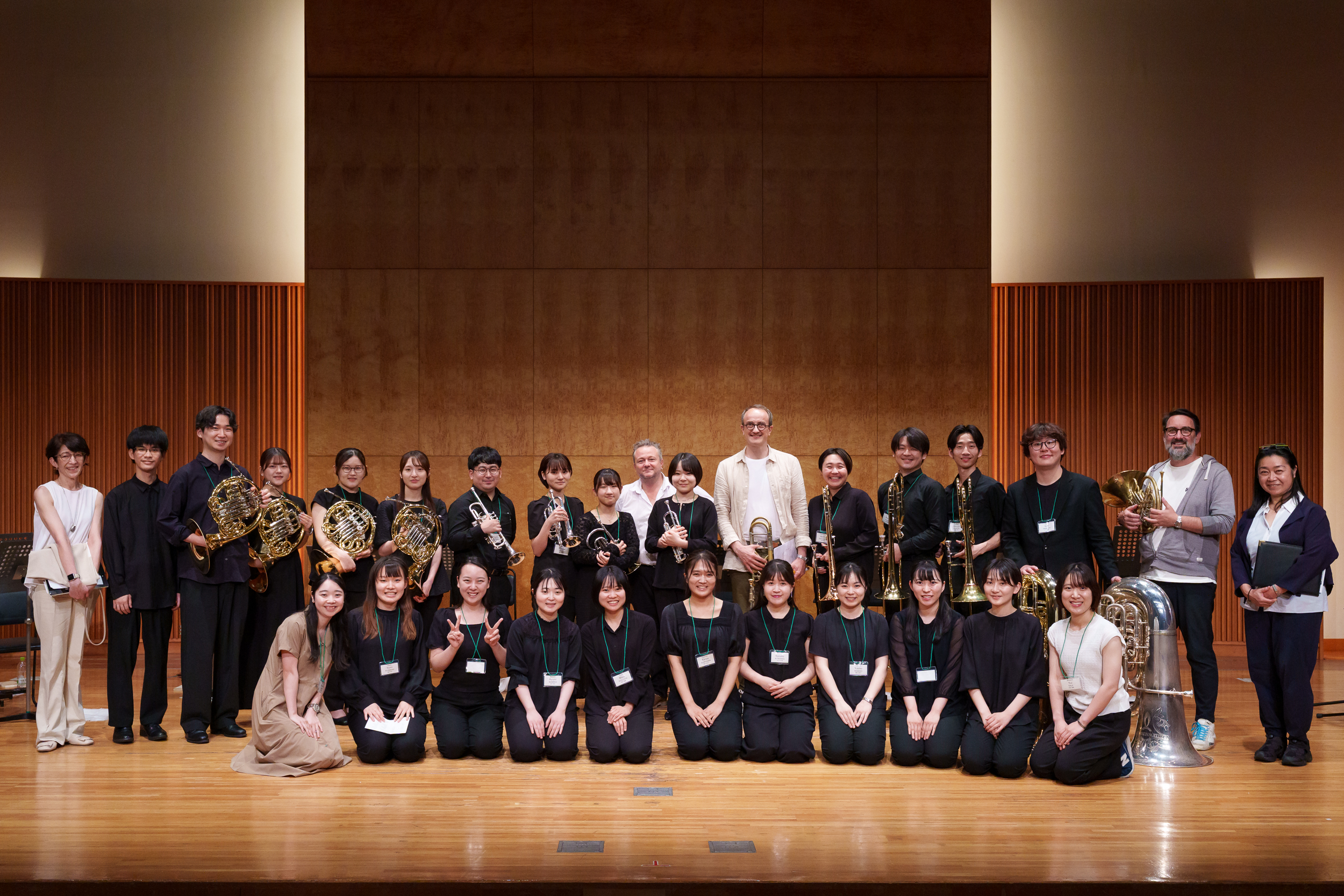
The public master class held on June 17, 2025, at Meguro Persimmon Hall and led by members of the Orchestre de Paris for GOA students, was a prime example of the valuable learning opportunities this academy provides. This was the second such class following 2023. Some of the participating students had also received instruction from Orchestre de Paris members in 2023, so they were highly motivated to further deepen what they had learned the previous time.
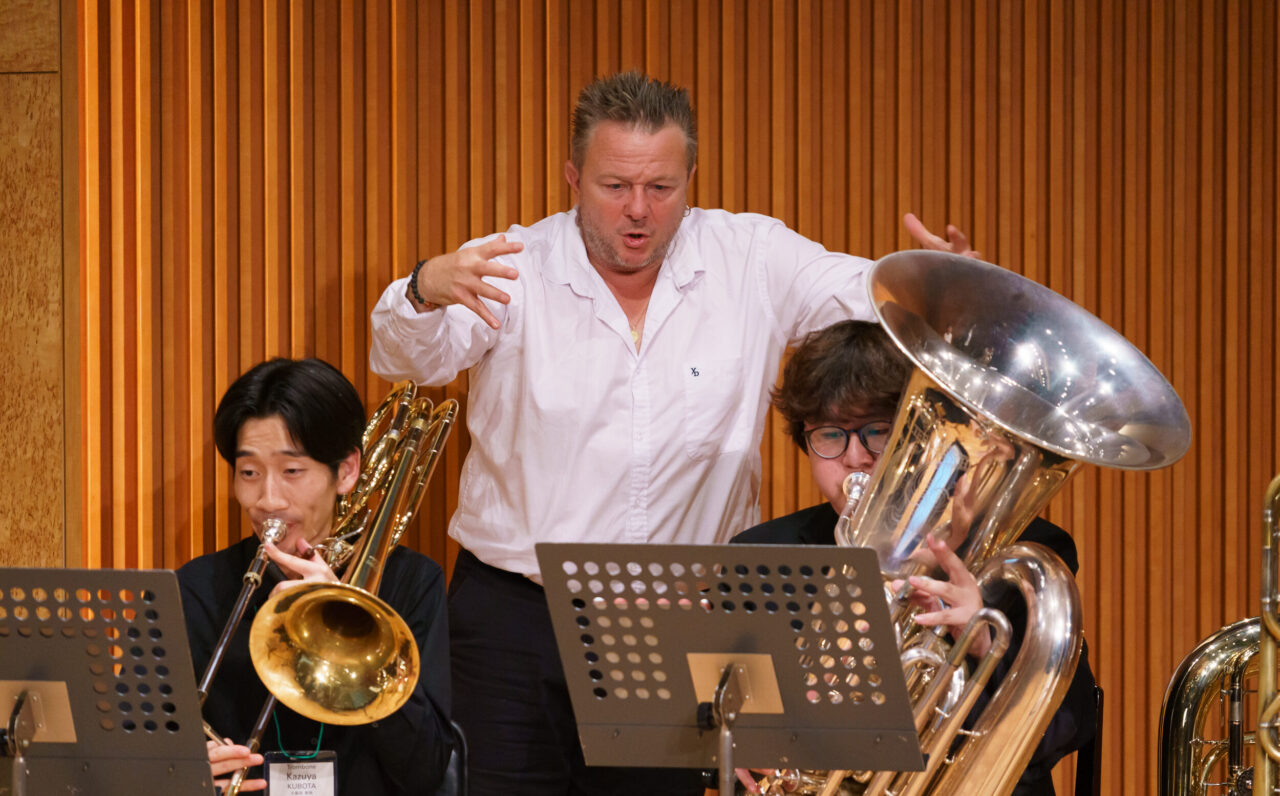
The instructors from the Orchestre de Paris this year were: Philippe Berrod (principal clarinet), Yuka Sukeno (bassoon), Benoît de Barsony (principal horn), Guillaume Cottet-Dumoulin (principal trombone), and Stéphane Labeyrie (principal tuba). To facilitate the sectional lessons smoothly, Hiroyuki Nishimura (currently at the Graduate School of Tokyo University of the Arts) supported the students’ performances as the conductor. Each of the woodwind and brass sections had three-hour lessons, which focused mainly on the Orchestre de Paris’s repertoire, providing the students a fulfilling orchestral study lesson.
Since its founding in 1967, the Orchestre de Paris has represented the artistry of French orchestras and has performed around the world. Including its predecessor, the Orchestre du Conservatoire de Paris, it boasts a history of about 200 years. For many music lovers, the very sound of a French orchestra brings to mind the Orchestre de Paris. Although a French orchestra, it employs the use of the German bassoon instead of the French bassoon, and while adapting to globalization, it continues to preserve the light, colorful resonance that defines French orchestral sound. Together with music lovers and wind instrument learners, the academy students gathered in the hall, likely sharing the same desire to uncover clues to the secrets of how that sound is created.
I had the opportunity to interview Philippe Berrod and Benoît de Barsony individually, and interestingly, they both told me exactly the same thing about the characteristics of the Orchestre de Paris sound. Although the orchestra has become more international, with members of various nationalities including Japanese members, the essential core of the ensemble is still firmly preserved. What defines the Orchestre de Paris above all is that, in order to create those almost magical moments, every member approaches each concert with initiative—sometimes even making suggestions to the conductor. Philippe Berrod described it as a “chamber-music-like” orchestra. According to Benoît de Barsony, the woodwind section has always been at the center. Both Philippe Berrod and Benoît de Barsony assert that no matter how globalized the conductors, soloists, repertoire, or instruments may become, the essence of the Orchestre de Paris never changes.
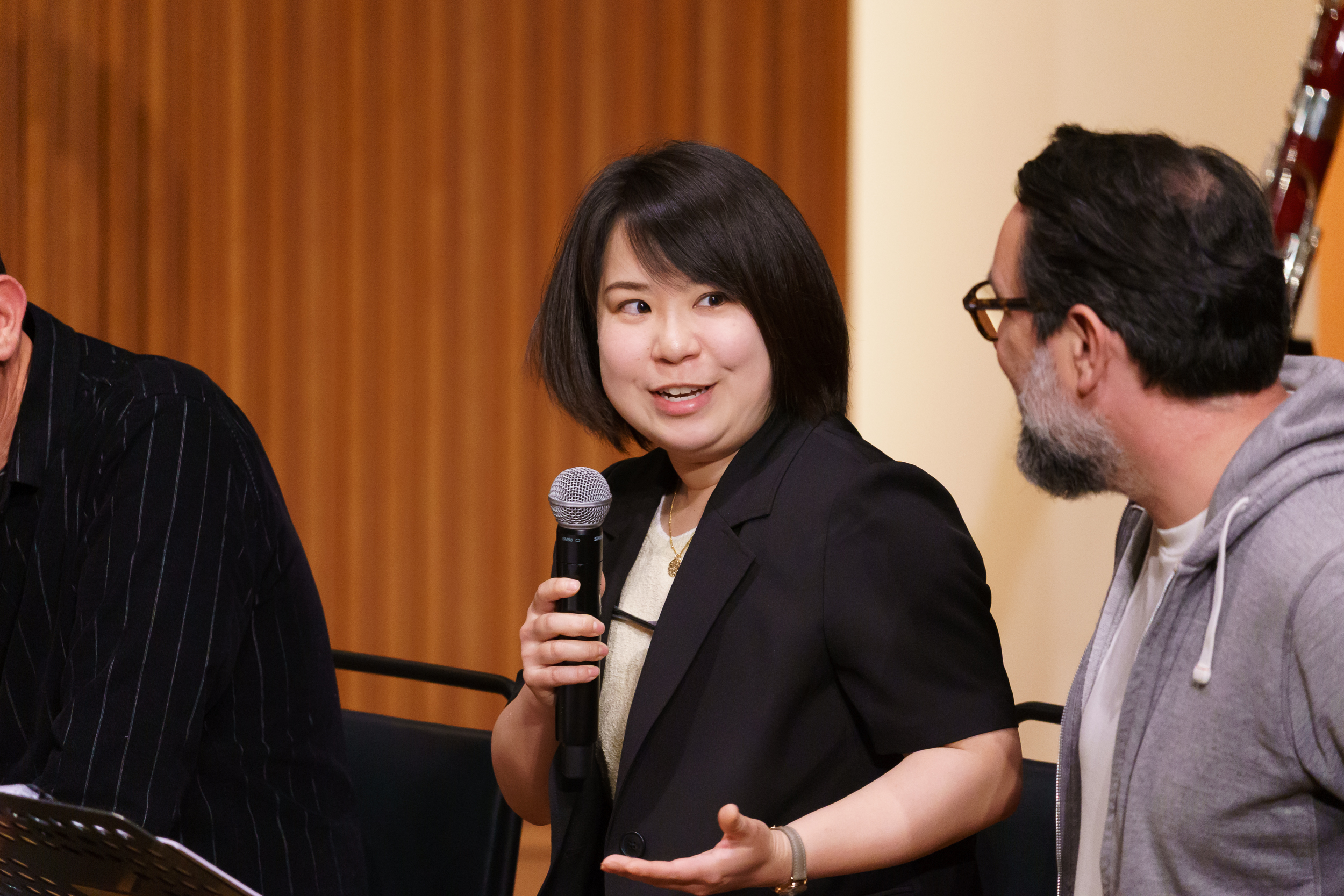
Yuka Sukeno, who has been a bassoonist with the Orchestre de Paris since 2019, also described its musical identity: “It is, above all, an orchestra where there is playfulness between music and the ensemble. Every member, and not just the principal members, plays with the consciousness of being a soloist, and that self-directed approach produces a sound that seems to pour down from the heavens — the sound of the Orchestre de Paris.” Before joining, she studied at the academy of the Bamberg Symphony and played in the Bern Symphony Orchestra in the German-speaking part of Switzerland, but she said she naturally felt at home in the freer atmosphere of the Orchestre de Paris. This openness is surely another indispensable part of its music.
Tone Colors Created from Imagery
In the woodwind lesson, two works were chosen: Berlioz’s Symphonie Fantastique and Debussy’s La Mer. Both are signature works of the Orchestre de Paris, and were performed at its inaugural concert on November 14, 1967, at the Théâtre des Champs-Élysées. Symphonie Fantastique is also included in the program for their Japan tour in 2025.
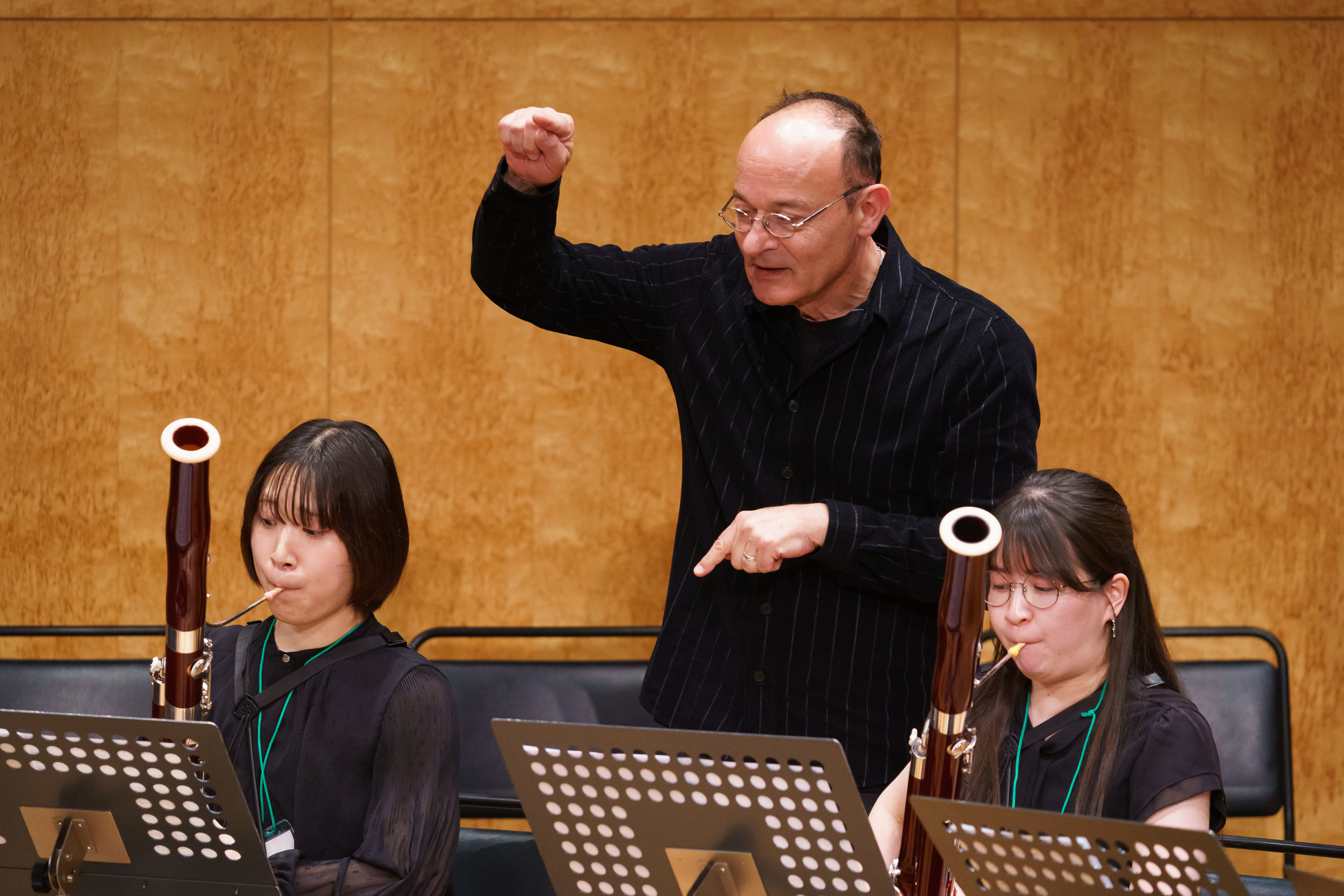
The academy students’ performance at the beginning of the lesson clearly reflected the extensive preparation they had made for this master class and demonstrated a high degree of mastery. Yet both in Berlioz and Debussy, one sensed that the performers did not share a unified image of the works. Philippe Berrod quickly noticed that the students were too focused on playing the notes correctly, so he guided them by presenting concrete images and characters for each movement.
For the Symphonie Fantastique, he urged them to narrate the story from the serene opening of the first movement, and to embody the characters of the tale at the musical climaxes. In the second movement, while the orchestra is dancing the waltz, the players must always be conscious of how the characters’ emotions sway within it. In La Mer, he encouraged them to imagine the sea of Brittany as Debussy saw it, and going even beyond that, the sea depicted in the Japanese ukiyo-e prints that had inspired him in order to build phrases and resonance with the composer’s sources of inspiration in mind.
Philippe Berrod’s words provided hints for unlocking the secret of the Orchestre de Paris’s colorful sound. With these images, the students’ performance gained an obvious sense of depth. His teaching also indicated that musicians must always store as many images as possible in mind, which requires not only instrumental practice but also leading a fulfilled life. The fact that GOA offers a wide range of curricula beyond instrumental lessons is precisely to cultivate such richness. The students who took the lesson fully recognized the importance of having a clear musical image.
“In Debussy’s La Mer, the explanations that ‘here, it is the wind, here, it is the waves, here, it is the bells,’ or the metaphor of ‘as if you yourself had become one of the colors in a Monet painting,’ were very vivid and easy-to-understand advice. I realized that moving forward I would like to continue to play while keeping in mind what the characteristics and form of the music, and each scene are trying to represent,” said Kuriyama.
“When I practice orchestral excerpts for future auditions, I want to delve deeper into the character of the pieces and their historical background,” added Furukawa.
Of course, it was not only about musical images—technical guidance essential for performance was also provided. Yuka Sukeno supplemented the lessons with technical advice that the students were likely seeking, especially delving into how to build harmony. She emphasized that when playing chords as a section, it is important not only to produce the correct pitch but also to use the whole body to resonate the sound.
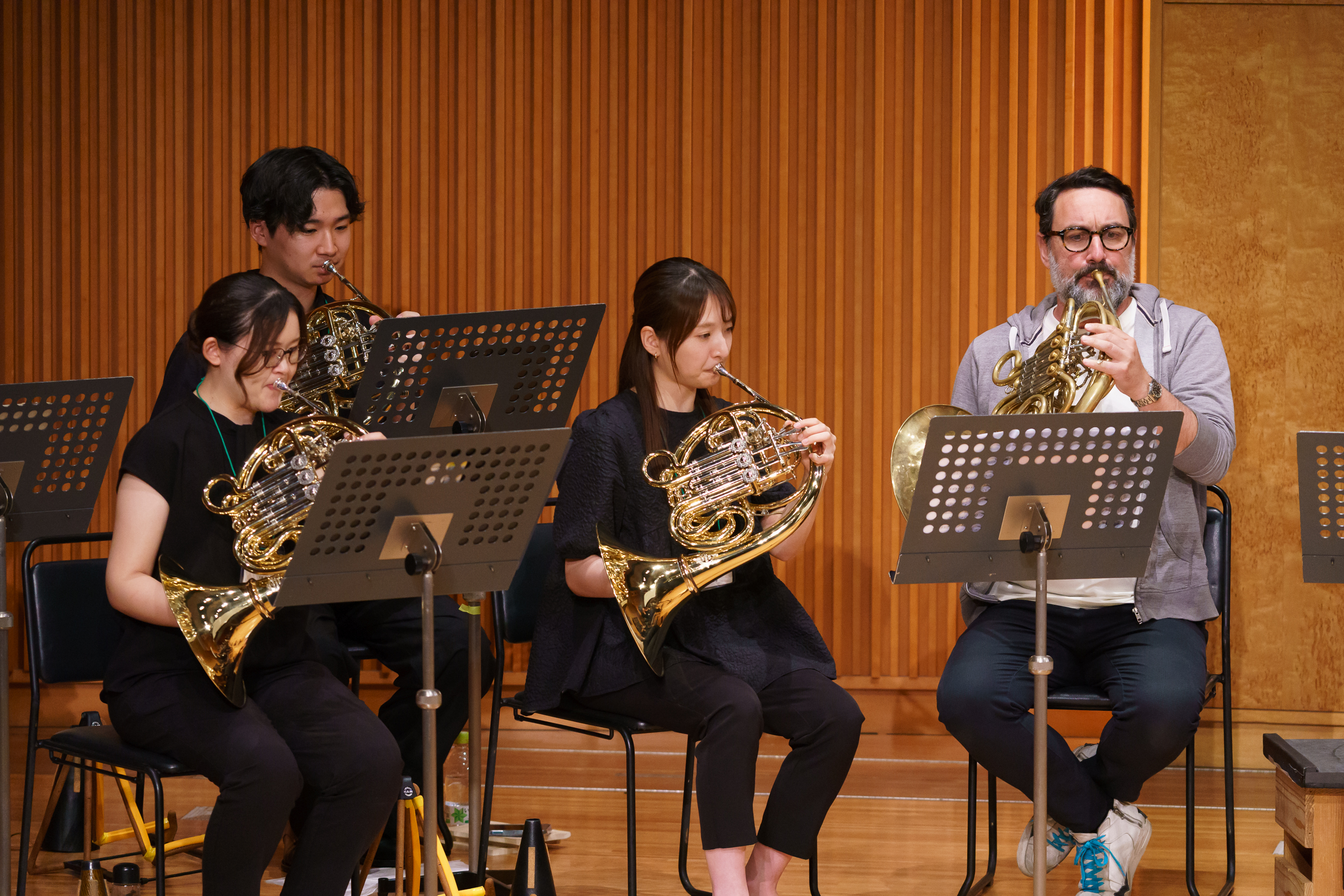
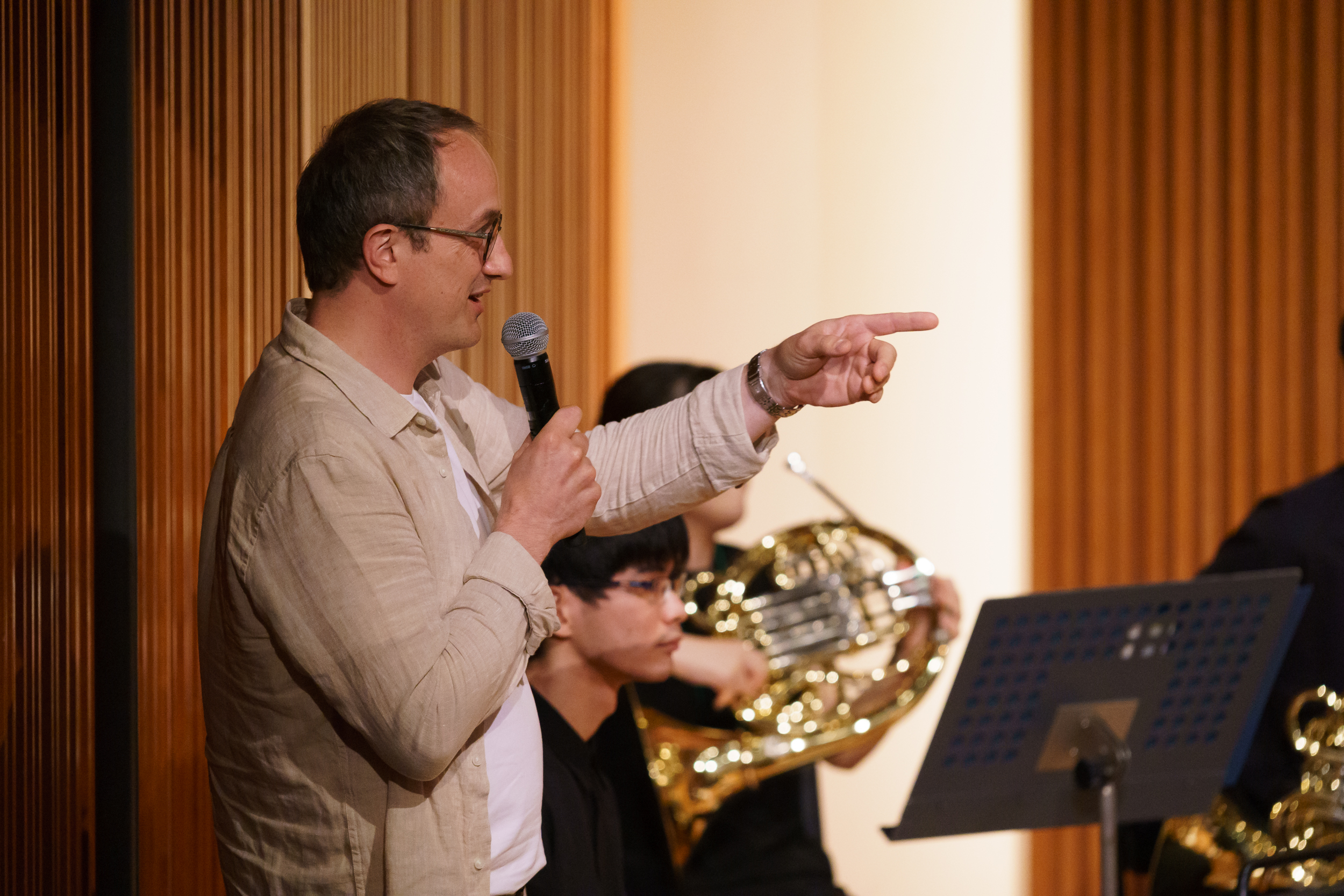
Benoît de Barsony actively demonstrated through his own playing, sometimes even sitting next to the students and performing with them. Feeling first-hand the resonance of a principal player of the Orchestre de Paris at such close range must have been an invaluable experience for the students.
“There are many pieces of advice I want to treasure, but what struck me the most was when Mr. de Benoît de Barsony came over and played with us. In that moment, I learned so much—from tone color choices and phrasing, to the leadership of a principal player. It was a rare opportunity to feel the world’s best at such proximity,” said Furukawa.
In the woodwind lesson, Gounod’s Petite Symphonie was also performed, and the instructors praised the students’ skillful playing, saying they “already understood the esprit of the work.” With little time left, there was not much detailed instruction, yet the students themselves accurately captured the essence of Gounod’s witty, elegant music. The hesitation sensed in their orchestral excerpt performance was absent here, likely due to the fact that chamber music was a more familiar realm for them. Put another way, gaining sufficient orchestral performance experience is not easy, making the significance of such master classes all the greater.
The Skill of Choosing the Right Tone Color from a Diverse Palette
In the brass lesson, they began with a Chorale by Bach arranged by Guillaume Cottet-Dumoulin, followed by the fanfare from Dukas’s La Péri, Bruckner’s Symphony No. 9, and, as with the woodwinds, Berlioz’s Symphonie Fantastique.
What was most surprising in the brass session was the extraordinarily high level of the academy students’ playing. While the woodwind students had also been brilliant, the brass students reached an even higher level of excellence.
The fanfare from La Péri was so convincing that it made one want to shout “Bravo!” The brass lessons emphasized even more than the woodwind sessions the creation of resonance within the section, which is natural given their orchestral role. But the core of the instruction focused on how to vary that resonance according to the composer and the piece. Again, imagery was the key.
In La Péri, when Guillaume Cottet-Dumoulin advised them to play with the image of French speech, the sound instantly transformed—it became brighter and more radiant. Their carefully constructed and rehearsed performance suddenly gained greater flexibility through just the simple image of the French language, acquiring nuances more fitting for Dukas’s music in the process. The transformation was so remarkable that Guillaume Cottet-Dumoulin himself exclaimed he had “goosebumps at how wonderful it was.”
Nobuaki Fukukawa, a horn player and Music Advisor for GOA, remarked to me that he hoped the academy students would sense how the sound of the French language influences the performance of French music. It was in that moment that the students grasped that concept.
In orchestral performance, it is necessary to understand the sound each composer seeks and to choose the appropriate tone color from a diverse palette. So, imagery may well be considered part of performance technique itself. The brass instructors selected the assigned orchestral pieces from various countries and eras precisely so the students could learn distinctions of such sound and resonance.
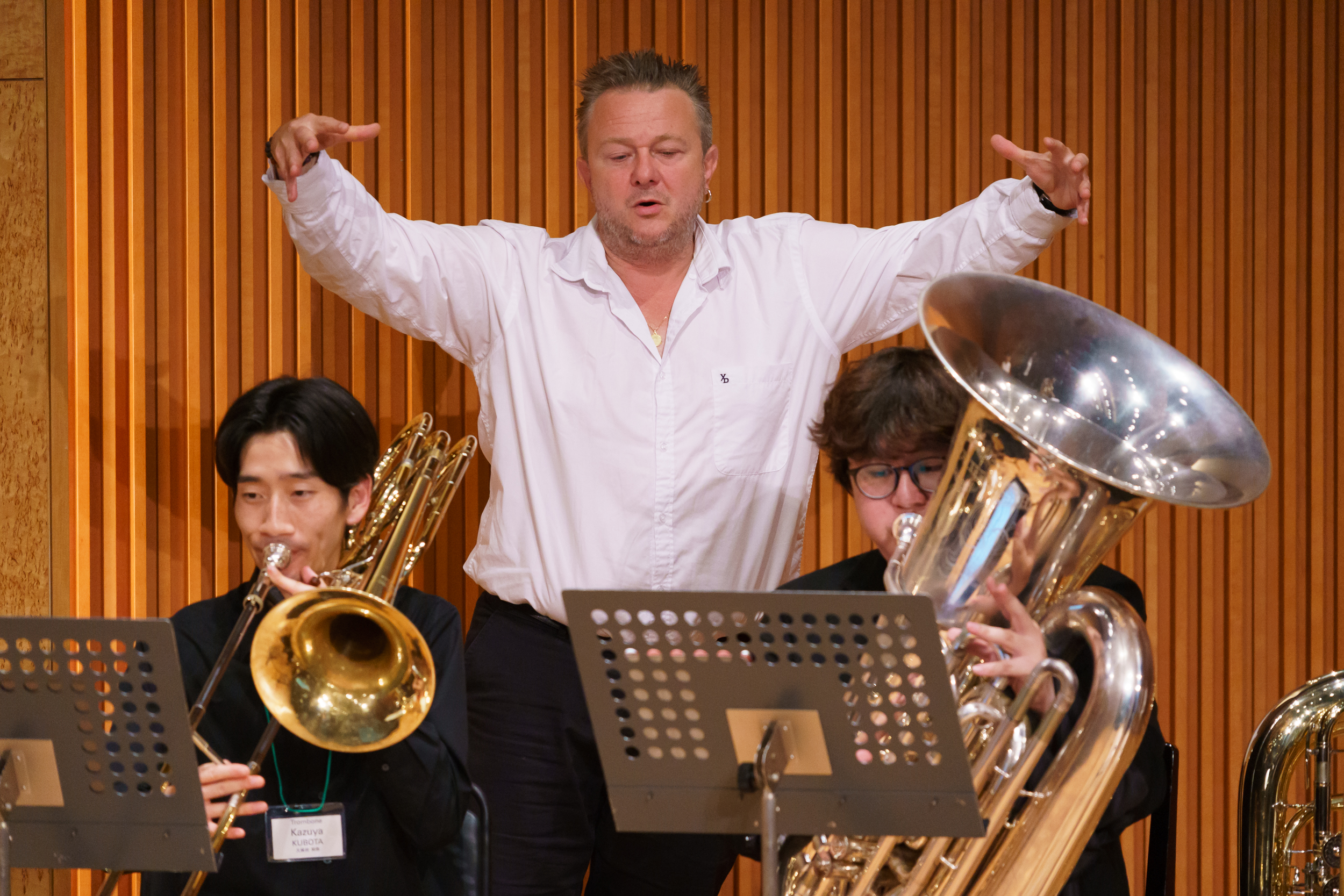
The sound required for Bruckner is, of course, entirely different from that of Dukas. Stéphane Labeyrie repeatedly instructed them to phrase, articulate, and release their notes with constant awareness of the organ.
In the Symphonie Fantastique, the tuba players were advised to play with a muffled resonance, as if speaking with the nose pinched, a sound similar to that of the ophicleide and serpent. Such advice showed that knowledge of historically informed performance and early instruments is indispensable even for modern orchestra players.
What kind of tone color did the composer imagine when orchestrating the piece? And how did the work sound at its premiere? Learning in this way is as essential as knowing the sound of the Atlantic waves.
Yuki Yamada, in his final year at the academy and currently serving as principal tuba in the Sendai Philharmonic Orchestra, said that for a professional like himself, such knowledge is indispensable.
“I realized that the members of the Orchestre de Paris play with a strong sense of awareness of the orchestration of the time the works were composed, and of the era and background in which the composers lived,” Yamada said.
At the end of the lesson, there was a Q&A session where the students asked the instructors a wide range of questions—from how to approach performances and how to refresh themselves, to playing techniques that minimize physical strain.
Among these was the question: “What are the characteristics of Japanese players, and what do they lack?” Guillaume Cottet-Dumoulin responded: “Japanese youth have long approached music in a serious manner, but nowadays I feel they also have the eagerness to take a step forward and pursue their own expression. Their level is now on par with that of Europe and America.”
Having been in attendance for the master class myself, I share his opinion. In particular, the performances of the brass students could rightly be described as world-class. Philippe Berrod and Benoît de Barsony were also astonished by the high level of the academy, with Benoît de Barsony remarking that “there were several who could already succeed in professional orchestras.”
Yet judging from the facial expressions of the students, one could sense that they were still in disbelief from the instructors’ comments. When these students come to take pride in their own efforts and truly believe in the music they create, they will soar into the world. This master class gave a strong sense that such a day may very well be close at hand.